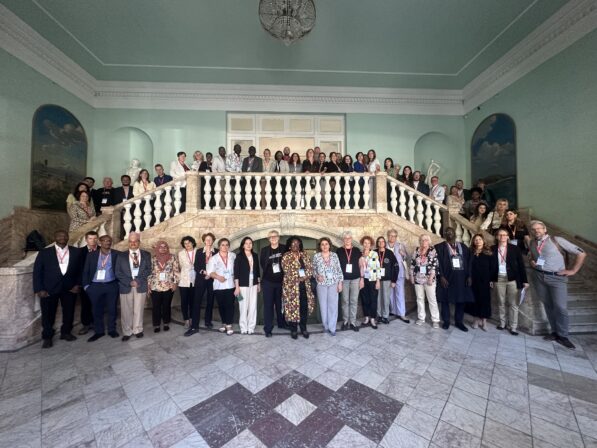


From 30 September to 2 October, the National Library of Armenia hosted the annual EIFL (Electronic Information for Libraries) general assembly, with the participation of representatives from the library field from countries all over the world, along with a number of scholarly publishing houses (Oxford University Press, Cambridge University Press, Brill, EBSCO, Sage, The Company of Biologists etc.).
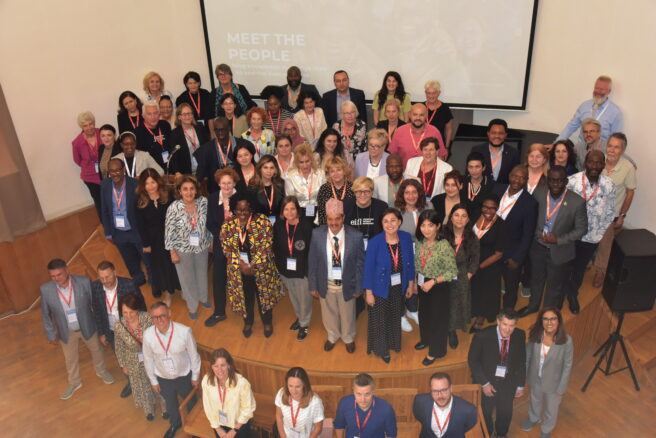
EIFL is an international non-profit organisation that works with libraries in developing and transition-economy countries to enable free and fair access to knowledge. It supports libraries in providing electronic resources, training, and innovative services that help communities learn, research and develop sustainably. EIFL focuses on removing barriers such as high subscription costs, legal restrictions, and limited technology so that people everywhere can access, use, and share information.
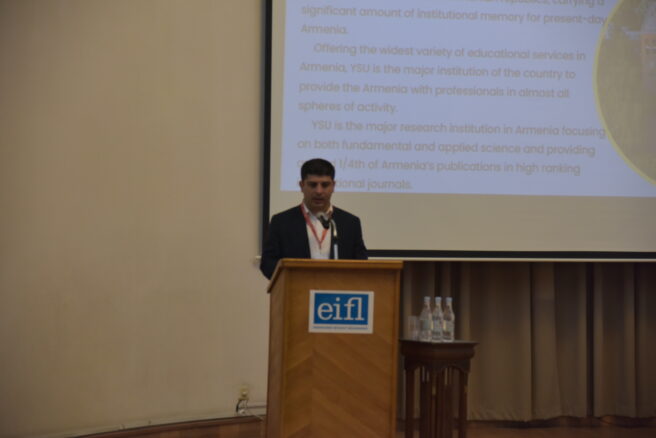
During the first day of the conference, a series of thematic sessions took place, including “Open Science and Information in Armenia”. Rafayel Barkhudaryan, Vice-Rector for Scientific Affairs, Yerevan State University and Dr. Anna Chulyan, the Director of the National Library of Armenia and President of the Armenian Digital Libraries Association delivered their presentations, in which they outlined the current state of open access journals, repositories, and national policies.
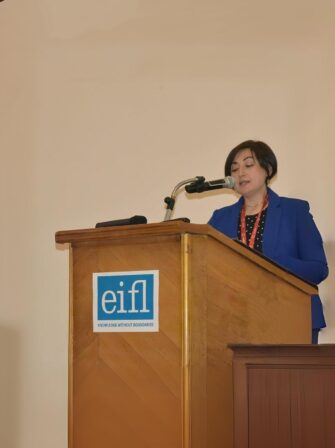
At the session on “Open science and research assessment reforms” Anne-Catherine Fritzinger (Sorbonne University) and Jeroen Bosman (Utrecht University) spoke about the experiences of France and the Netherlands. It was presented how Sorbonne University has discontinued its subscriptions to Web of Science and Clarivate tools, transitioning to open and freely accessible platforms, particularly adopting OpenAlex. The Utrecht University experience highlighted how the recognition and advancement of researchers is based on transparency and social impact moving away from traditional rankings and reliance on impact factors.
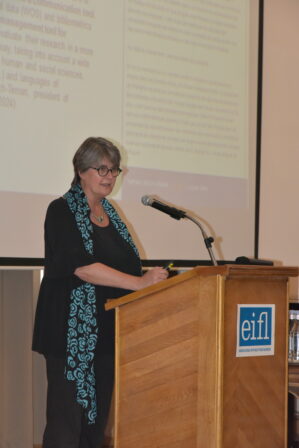
In the course of the session on “Negotiations with Publishers” the terms of cooperation with reputable international publishing houses were discussed. The first day’s program also included an exchange of experiences between participants and professional discussions.

During the second day at the session on “Knowledge-Sharing Consortia” (participants from EIFL countries ONLY) delegates from Africa (Botswana, Cote d’Ivoire, Ethiopia, Ghana, Kenya, Lesotho, Malawi, Namibia, Senegal, Tanzania, Zambia, Zimbabwe) shared their achievements, progress, and ideas.
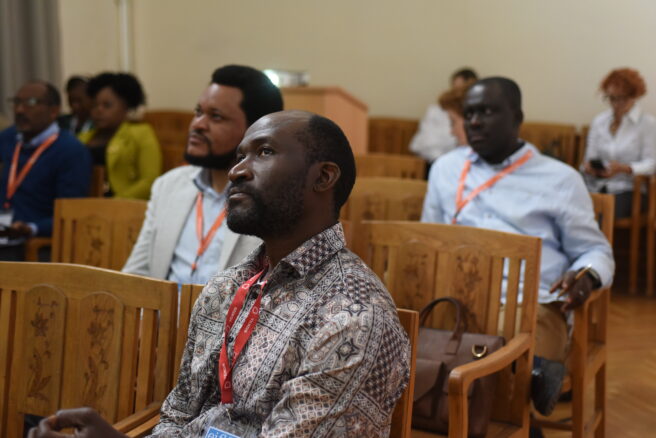
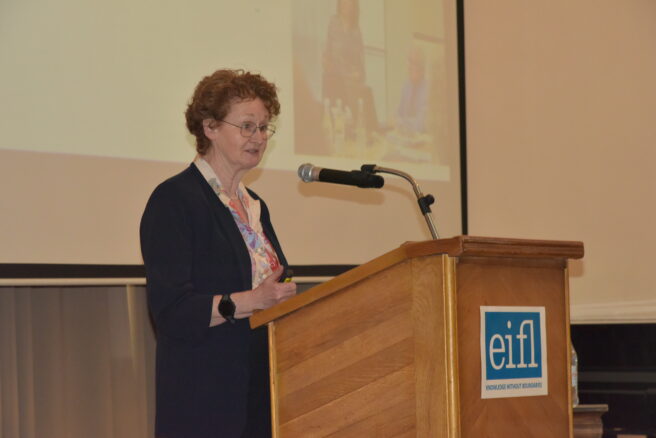
At the session on “Rights retention and secondary publication rights: two sides of the same coin” Teresa Hackett, EIFL Copyright and Libraries Programme Manager presented new EIFL resources that provided powerful tools to advance Open Access- including rights retention and secondary publication rights. Three resources were highlighted: EIFL’s Guide for Libraries, EIFL’s Position Explained and the updated version of EIFL’s Draft Law on Copyright, which introduce a new model provision on secondary publication rights.
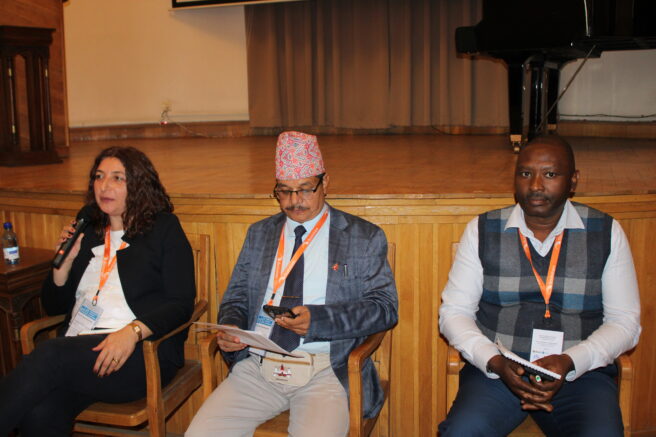
The EIFL General Assembly featured a panel on “Dimond Open Access”. Participants shared their experiences in publishing Dimond OA journals. The session was lively and informative, providing valuable insights into strategies for fostering “Diamond Open Access” and the progress being made in their respective countries.
Delegates enjoyed a fascinating guided tour of the Museum of Printing at the National Library of Armenia. One of the highlights was the first printed Armenian Map of the World, published in Amsterdam in 1695, showing the world as it was known at that time.

During the second and third days, discussions were also held on the use of Persistent Identifiers (PID’s) tools, as well as on current issues in artificial intelligence and digital repositories.
The EIFL annual conference is an important platform where representatives of the international library and academic communities come together to exchange knowledge, strengthen collaboration, and advance the principles of open science.