



Founded in 1895, the Swiss National Library was established at a time when modern Switzerland was still defining its institutions and cultural memory. Its first home was strikingly modest: a four-room flat at Christoffelgasse 7 in central Bern. The task entrusted to it, however, was anything but modest. In 1894, Parliament asked the new library to collect publications connected with Switzerland since the foundation of the federal state in 1848, known as Helvetica.
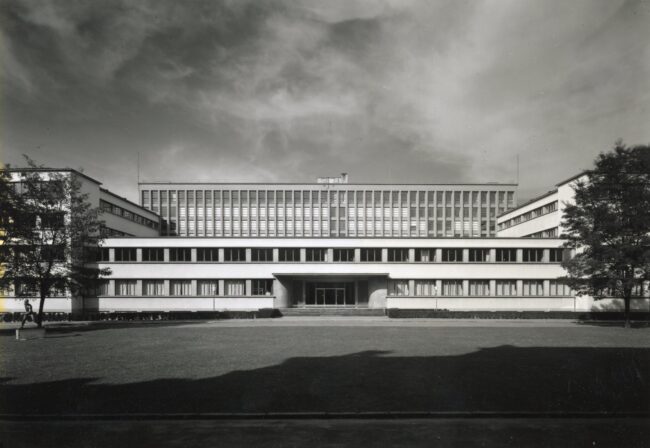
In 1899, the library moved to the newly built Federal Archives, where its collections were made available to the public. In 1931, it moved to its current home: a purpose-built library at Hallwylstrasse 15 in Bern’s Kirchenfeld district. Designed in the spirit of “Neues Bauen”, the building reflects the ideals of modern library architecture: clarity, restraint and functionality.

Today, the library preserves much more than printed books. Its collections bring together newspapers, journals, manuscripts, photographs, prints, posters, sound documents and digital publications, the written, visual and acoustic traces of a multilingual country. These collections also include the Swiss Literary Archives, the Prints and Drawings Department, the Swiss National Sound Archives in Lugano, and the Centre Dürrenmatt in Neuchâtel.
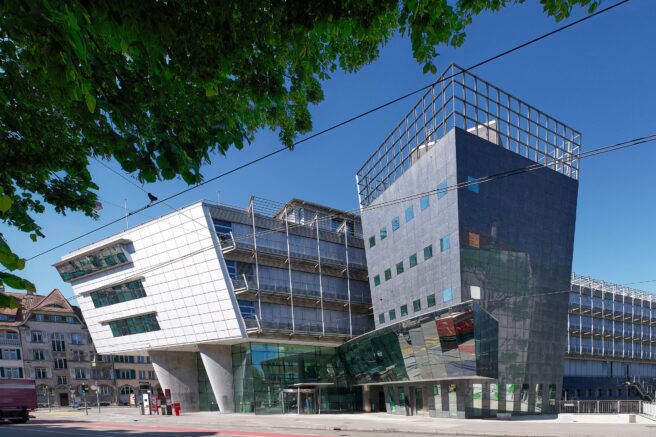
Between 2027 and 2034, the historic building will be renovated. While the collections remain in the underground stacks, public services will temporarily move to Monbijoustrasse 74 in Bern. The library’s work will continue throughout. In 2034, it plans to welcome readers and visitors back to a building faithful to its architectural character and ready for the coming decades.
Hidden and fun facts about the Swiss National Library:
Read more on the national library’s page on CENL.