


The National Library of Estonia (RaRa) is validating and developing an AI solution for memory institutions with the aim of using open-source, locally deployed language models to generate high-quality descriptions for digital heritage materials.
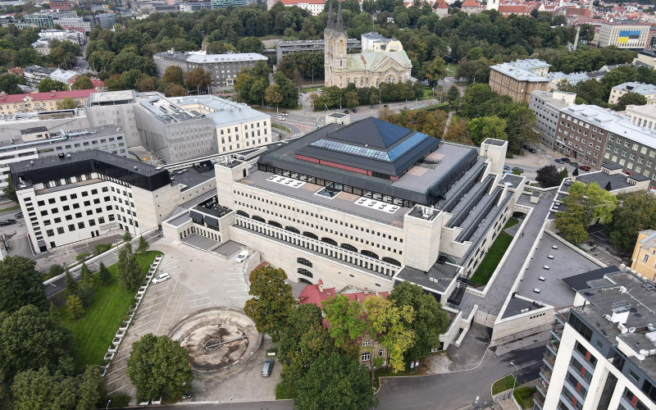
The initiative is part of a broader national programme in Estonia, under which the Ministry of Economic Affairs and Communications is providing a total of €1.3 million to support the adoption of artificial intelligence in the public sector. The project led by the National Library of Estonia is one of the first seven projects to receive funding.
The project addresses a major challenge shared by memory institutions — libraries, museums and archives: vast amounts of cultural heritage have been digitised, but describing these materials and creating metadata manually is both time-consuming and costly.
The technical solution is based on open-source large language models (LLMs) that can be deployed and processed locally. Local deployment ensures that sensitive or copyright-protected cultural heritage data is not transferred to third-party cloud services outside Estonia. The models will be trained and fine-tuned using high-quality Estonian-language text corpora and datasets managed by the National Library of Estonia’s Digital Lab (Digilab). The resulting software solution will be validated and adapted so that it can also be easily used by other Estonian memory institutions.
Why are local models important? Conventional commercial language models, such as ChatGPT, have learned Estonian partly from online comments and machine-translated content, which may result in inaccuracies or distortions when dealing with more nuanced cultural and historical details. The solution being developed by the National Library will make it possible to create specialised AI models that accurately understand Estonian historical terminology, personal names and cultural context, and can automatically generate reliable image descriptions, content summaries and keywords.