


The National Library of Greece (NLG) and the General State Archives (GSA) co-organised the exhibition “At the Glorious Threshing Floor: Missolonghi 1826, The Exodus” held at the 4th-floor atrium of the NLG at the Stavros Niarchos Foundation Cultural Center (SNFCC). The exhibition was inaugurated on Friday, 20 March 2026 by H.E. the President of the Hellenic Republic, Konstantinos An. Tasoulas and a welcome address was delivered by the Minister of Education, Religious Affairs, and Sports, Sofia Zacharaki.
This exhibition is dedicated to the bicentenary of the Exodus of Missolonghi, an event that holds a central place in the history of the Greek War of Independence. In April 1826, after a year‑long siege and severe famine, the people of Missolonghi chose to break through the Ottoman lines rather than surrender. Their courageous decision resulted in heavy losses, but it also became a powerful symbol of sacrifice and the unyielding struggle for freedom, inspiring philhellenes across Europe, strengthening international support for the Greek cause, and highlighting the determination of the revolutionaries. Today, the Exodus is remembered as an enduring testament to bravery, resilience, and the pursuit of liberty.
Rare archival documents, manuscripts and printed books, artworks, maps, and historical artifacts offer visitors the opportunity not only to experience the dramatic moments of the siege, but also to realize the profound significance of the collective sacrifice, and the national and international impact of the Exodus. At the same time, the exhibition presents the facts that preceded and led to the self-sacrifice of the defenders of Missolonghi, tracing the city’s course through time, its evolution and its contribution to the struggle for Independence, culminating in its inscription in collective memory as an enduring symbol of freedom.
Among the exhibits, some of the most notable are those related to Lord Byron’s stay in Missolonghi and his death in April 1824, a year before the siege began. As one of the most celebrated and influential poets in English literature, Lord Byron’s presence in Missolonghi significantly influenced the Greek War of Independence, providing the Greek cause with international visibility, political support, and moral authority. His death transformed him into a martyr for the Greek struggle and solidified his status as a Romantic icon.
A special-edition publication, featuring supporting texts and a selection of the exhibits, has been produced by the National Library of Greece, under the editorial supervision of Stavros Zoumboulakis, President of the NLG Board of Trustees.
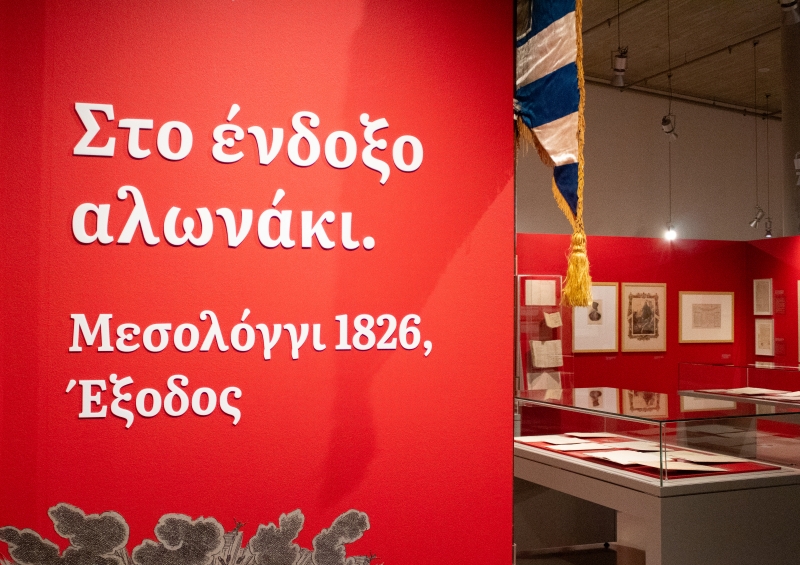 View of the exhibition © National Library of Greece
 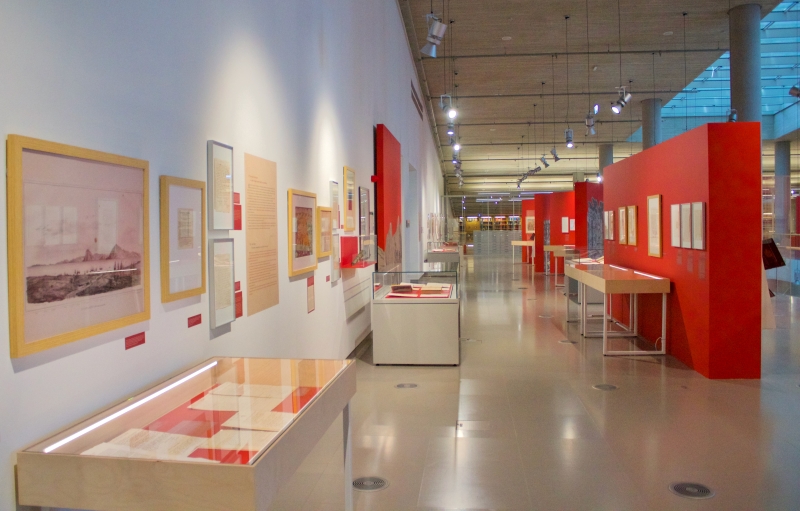 View of the exhibition © National Library of Greece
 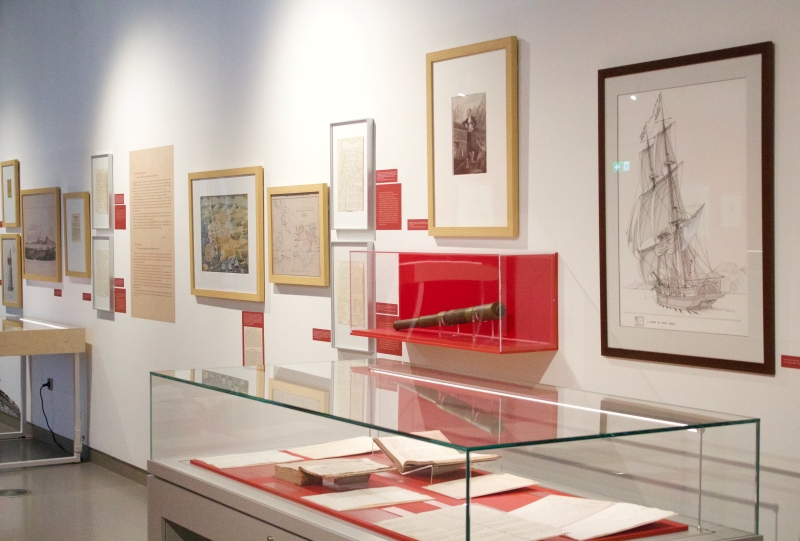 View of the exhibition © National Library of Greece
 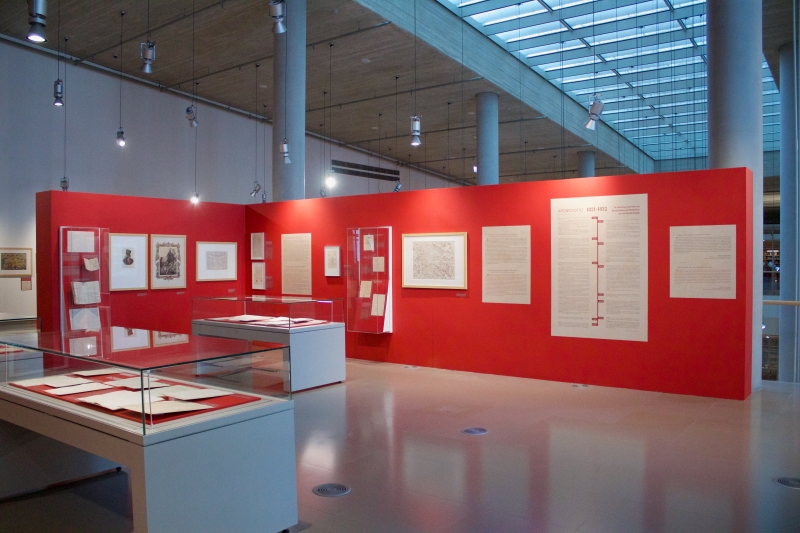 View of the exhibition © National Library of Greece
 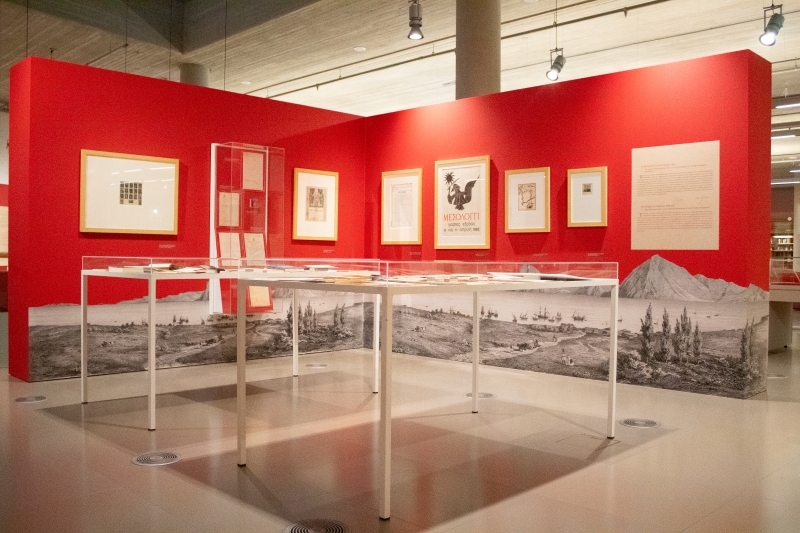 View of the exhibition © National Library of Greece
 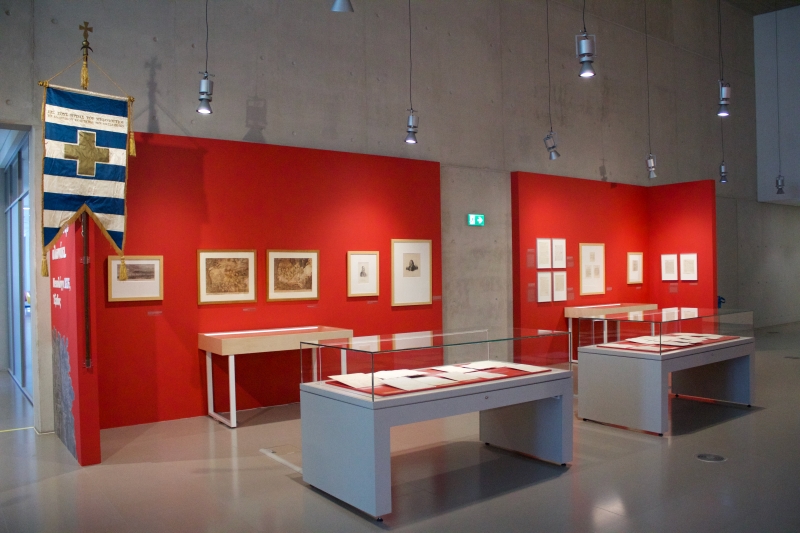 View of the exhibition © National Library of Greece
 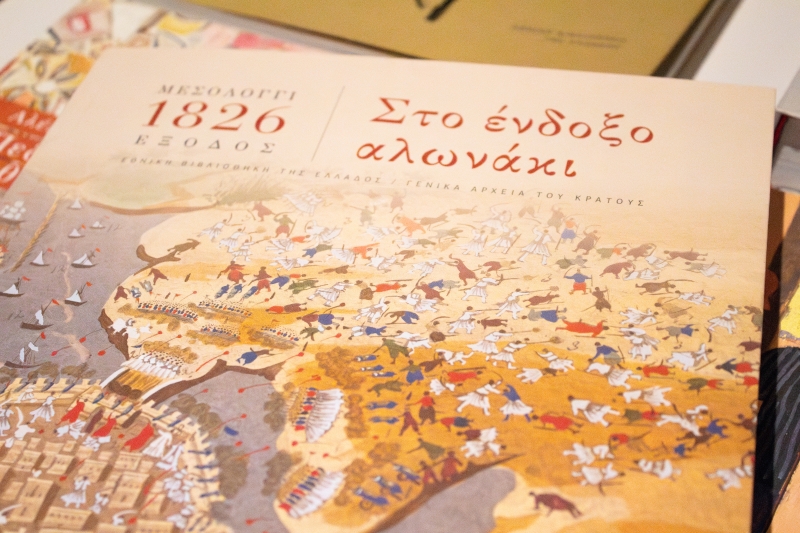 View of the exhibition © National Library of Greece
 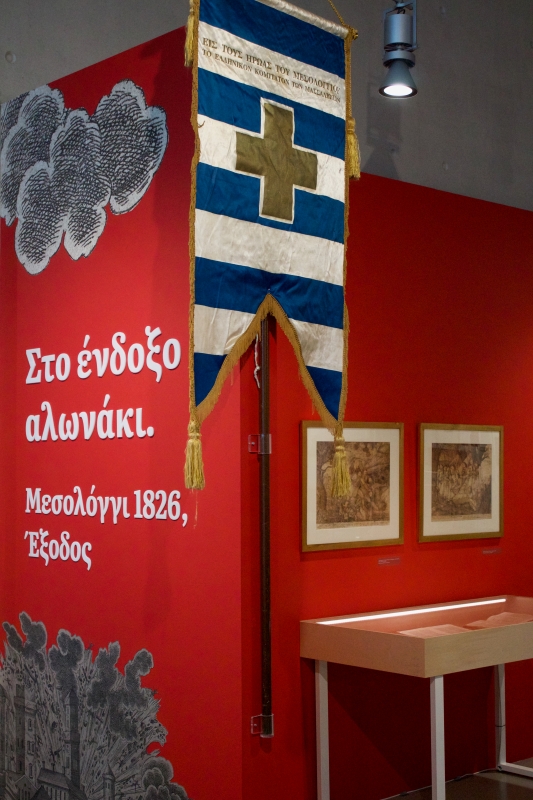 View of the exhibition © National Library of Greece