


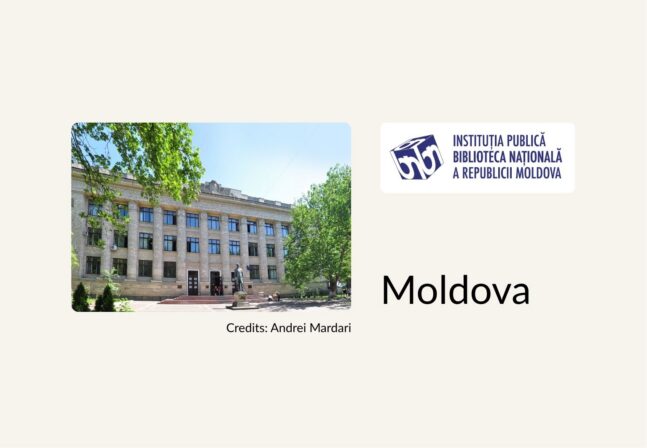
The Book Museum
The Book Museum of the National Library of the Republic of Moldova, inaugurated in 2018, is one of the country’s most unusual and valuable cultural spaces. Established on the basis of the collections of the Old and Rare Books Section, which comprise over 30,000 heritage documents, the museum offers a fascinating journey through the evolution of writing, printing, and books over the last five millennia.
Here, history can be explored through ancient manuscripts, rare editions printed in major European centers, religious books, miniature books, and volumes that preserve the subtle traces left by readers from past centuries. Among the most fascinating exhibits are the facsimile copy of “The Ostrog Gospel” (1056), the oldest document displayed in the museum, and one of the oldest European printed books in the collection — a 1551 edition containing “Aristotle’s Categories”, published in Venice.
Visitors to the Book Museum can discover the earliest writing materials — clay tablets, wax tablets, papyrus, and parchment — and follow the way books have accompanied the development of human civilization throughout the millennia. The exhibition includes volumes with covers carved from bone, ivory, or silver and adorned with semi-precious stones, as well as the only book in the Republic of Moldova made entirely of metal, with its text engraved directly onto its pages.
Among the most impressive exhibits is the largest book in the country — the “Mammoth Book”, printed in 1766 over a period of three years and weighing approximately five kilograms. The museum also preserves the collection of Germany’s oldest scientific journal, „Acta Eruditorum” (1682–1782), the publication in which the great scholar Gottfried Wilhelm Leibniz presented his studies.
Visitors can also see books containing anti-theft curse formulas, such as “The Letter of Moldova” (Neamț Monastery, 1825), as well as volumes bearing the autographs of remarkable personalities including Vasile Alecsandri, Mihail Kogălniceanu, Aron Pumnul, Bogdan Petriceicu Hasdeu, and Gavriil Bănulescu-Bodoni.
In the digital age, the Book Museum reminds us that every volume represents not only a cultural artifact, but also a form of collective memory and human continuity.
A lesser-known fact: the museum’s exhibits are rotated every three months in order to protect the fragile documents and to give visitors the opportunity to continually discover new treasures from the written heritage of the Republic of Moldova.
Read more on the national library’s page on CENL.