


On 5 February 2026, representatives of the National and University Library of Slovenia (Ljubljana) participated in the organisation and delivery of the professional meeting Guardians of Cultural Heritage (Varuhi kulturne dediščine). The event reaffirmed that cultural heritage is not merely a record of the past, but an ongoing dialogue — one that today continues through digitisation, data spaces and the responsible use of artificial intelligence.
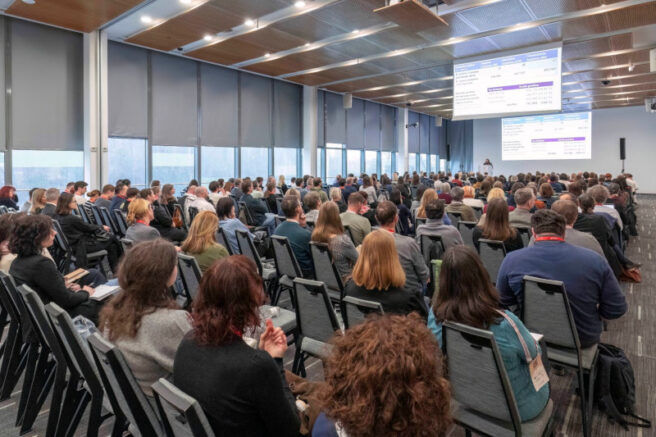
The event brought together distinguished experts from institutions engaged in preservation, digitisation and the application of artificial intelligence in the heritage sector. With nearly 300 participants, the event focused on how heritage institutions respond in practice to the rapidly growing demand for digital access, long-term preservation and the responsible use of AI. The conference was jointly organised by four key heritage institutions — the Archives of the Republic of Slovenia, the National and University Library of Slovenia, the National Museum of Slovenia, and the Museum Association of Slovenia.
Through a series of presentations, speakers highlighted major developments in digital heritage preservation. Topics included the development of the Slovenian data space for cultural heritage; digitisation and long-term digital preservation (including complex, large-scale corpora); online access to archival materials; museum object documentation; organisational challenges faced by museums in the digital transition; and the quality standards required for professional digitisation. Particular attention was given to artificial intelligence, which is increasingly becoming an important tool in heritage preservation — from processing and searching materials to supporting interpretation and enabling new forms of access.
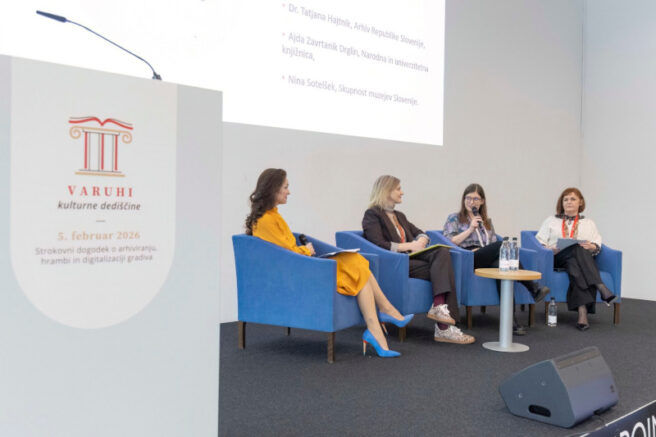
The central part of the day was a roundtable discussion on how digitisation and artificial intelligence are transforming the role of cultural heritage guardians. Participants included Tatjana Hajtnik, Head of the Electronic Archives and IT Support Department at the Archives of the Republic of Slovenia; Nina Sotelšek from the Museum Association of Slovenia; and Ajda Zavrtanik Drglin, application developer at the National and University Library of Slovenia. Among other points, Ajda highlighted the risks of excessive AI use and its broader impacts, including energy consumption, and emphasised the importance of processing materials within institutional infrastructures to avoid transferring protected content to uncontrolled commercial environments. She stressed that introducing AI is not only about technology, but also about trust, transparency and user engagement.
The speakers agreed that effective use of artificial intelligence requires appropriate competencies, clear ethical and legal frameworks (particularly regarding copyright-protected content), and collaboration across diverse areas of expertise. The discussion demonstrated that the future of cultural heritage preservation will rely on stronger connections between institutions, standards and people — supported by technology that enhances accessibility while remaining responsible, transparent and professionally grounded.
The Event Webpage (in Slovene) with photos: https://www.mikrografija.si/varuhi-kulturne-dediscine/