


A major new collection in Copia, Hungary’s largest digital manuscript repository, may open up new opportunities for research in Franz Liszt studies. As a result of a joint project between the National Széchényi Library (NSZL) and the Franz Liszt Memorial Museum and Research Centre (LFM) of the Liszt Ferenc Academy of Music (Liszt Academy), more than eight hundred letters and three diaries have been made freely accessible to the public. Several hundred items in the collection are being made available for the first time.
Following several months of cataloguing and processing work led by Dr Anna Laskai (Theatre History and Music Department, NSZL) and Máté Cselényi (LFM), the complete correspondence of Franz Liszt (1811–1886) preserved in the various collections of Hungary’s national library has become accessible online. The published material comprises more than eight hundred items. Among them are numerous documents that were known to specialists only in part, while a substantial portion has remained unpublished until now or was last printed in the early twentieth century. The present release is therefore of outstanding importance not only for Hungarian scholarship but also for international Liszt studies. Through digital access, a wide range of primary sources has become available, offering new perspectives for the study of Liszt’s life and oeuvre.
Under the “Letters” section of Copia, visitors can find not only autograph letters written by Franz Liszt, but also documents addressed to him, as well as materials connected to his close family members and fellow artists. The collection includes, among others, letters by one of Liszt’s closest friends and patrons, Antal Augusz (1807–1878), and by his great love, Princess Carolyne zu Sayn-Wittgenstein (1819–1887), who was born into a Polish noble family. These documents provide valuable insights into the cultural and personal networks of the period.
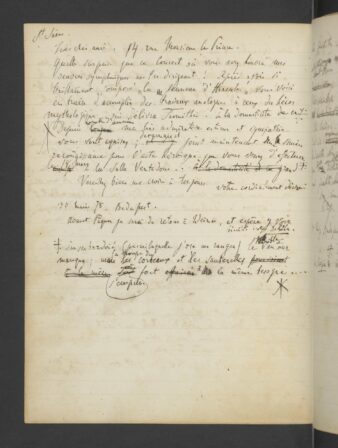
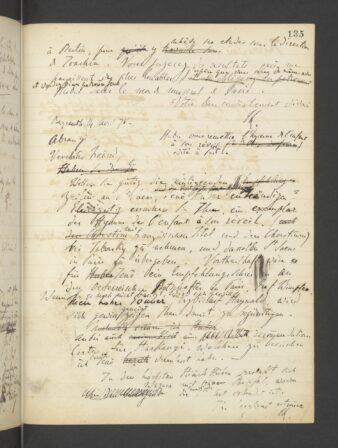
Among the more than eight hundred letters, a particularly remarkable item is Liszt’s letter-book, which preserves over three hundred draft letters written by the composer between 1877 and 1878. The volume has been in the institution’s possession for more than a century and has previously been available for consultation. However, a significant proportion of the letters it contains has remained unknown to Liszt scholarship to this day. The current project may provide the initial impetus for future work on a critical edition of Liszt’s correspondence and for a reassessment of the material in relation to the previously known source base.
The “Diaries” subsection likewise offers access to noteworthy documents. It includes two calendars containing autograph entries by Franz Liszt. One is a perpetual-calendar diary used by the composer in 1861, while the other is a Cecilia Calendar kept in 1876—a Catholic church music yearbook. Also made available is the 1878 appointment diary of Heléna Zaphiry, one of Liszt’s pupils, in which she recorded primarily her recollections connected with Liszt.
With the completion of the project, a significant portion of both Hungarian and universal cultural heritage has become freely accessible to all interested readers, while the international scholarly community has gained access to documents that were previously difficult—or in some cases impossible—to consult. The corpus of documents published online extends beyond the narrower interests of academic research. The Liszt source collection available through Copia—including manuscripts, correspondence, and diaries—can serve as a valuable resource not only for scholarly investigation but also for education and public outreach.
Link to the letters: Kereső – Copia Digitalizált Kéziratok
Link to the diaries: Kereső – Copia Digitalizált Kéziratok