


From 11 to 13 March 2026, Prague hosted another joint professional forum of representatives of central libraries and professional associations from the Czech Republic and Slovakia. The three-day meeting brought together representatives of Czech and Slovak institutions, including the National Library of the Czech Republic, the Slovak National Library, the Moravian Library, the Czech Librarians’ Association, and the Slovak Library Association. This year, the event was hosted by the National Library of the Czech Republic in the historic premises of the Clementinum.
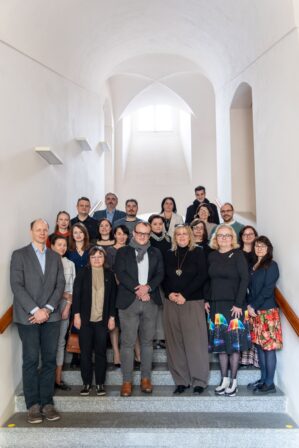
The forum provided a platform for discussion, exchange of experience, sharing of good practice, and reflection on the strategic challenges systematically addressed by libraries in both countries.
The programme was structured into three thematic blocks, each allocated approximately four hours. The event was formally opened by welcoming remarks from the Director General of the National Library of the Czech Republic, Tomáš Foltýn, and the Director General of the Slovak National Library, Eva Augustínová. In their speeches, both emphasized the importance of Czech-Slovak cooperation among libraries, the need to share practical experience in key areas of librarianship, and the necessity of strengthening international ties within the library and information science sector.
As Tomáš Foltýn noted: “This meeting builds on nearly thirty years of joint professional dialogue, which originally accompanied a fundamental transformation in library operations – the transition from card catalogues to electronic systems. Today, we are experiencing an equally dynamic period, not only in terms of technology, but also in redefining the mission and societal role of libraries for the coming decades of the 21st century. That role must be clear, understandable, and effectively communicated.”
The first thematic block focused on artificial intelligence in libraries and its impact on data management, internal policies, and professional education. Contributions addressed the legal and ethical aspects of AI use, the educational needs of library staff, and practical examples of AI implementation in Czech libraries. It is encouraging to see that in both the Czech Republic and Slovakia, libraries are becoming natural leaders in AI education and are actively engaged in developing similar types of projects.
The second block addressed political advocacy, marketing, and strengthening the societal role of libraries. Discussions explored how libraries communicate their value to the public and to funding bodies, and how they can reinforce their position within cultural and educational infrastructures. Particular emphasis was placed on strengthening external marketing, not only toward the general public, but also toward decision-makers and the commercial sector. At the same time, participants stressed the need for clearly defined priorities and internal professional consensus, supported by targeted internal communication.
Roman Hájek, Chair of the Czech Librarians’ Association, added: “The discussions at the forum made it clear that both Czech and Slovak participants feel a strong need to further professionalise communication in our field. Particularly inspiring was the debate on whether libraries are sufficiently confident in advocating for their interests, and what arguments they can employ to defend their societal relevance.”
The third thematic block focused on electronic legal deposit and access to digital content. Key topics included the legislative frameworks in both countries and the technical preparedness of libraries. Participants agreed that safeguarding digital cultural heritage and ensuring its accessibility represent one of the major challenges of contemporary librarianship. Preserving a comprehensive record of today’s society for future generations is no longer possible without systematic management and archiving of digital content.
All necessary steps are closely linked to cooperation among libraries, particularly in the development and operation of robust central systems, as well as in securing appropriate organizational and financial conditions.
At the conclusion of the forum, Eva Augustínová summarized its contribution: “During the meeting, several areas were identified where joint action can significantly strengthen professional activities, foster the development of shared projects, and improve the effectiveness of advocacy for libraries within the broader cultural and social context.”
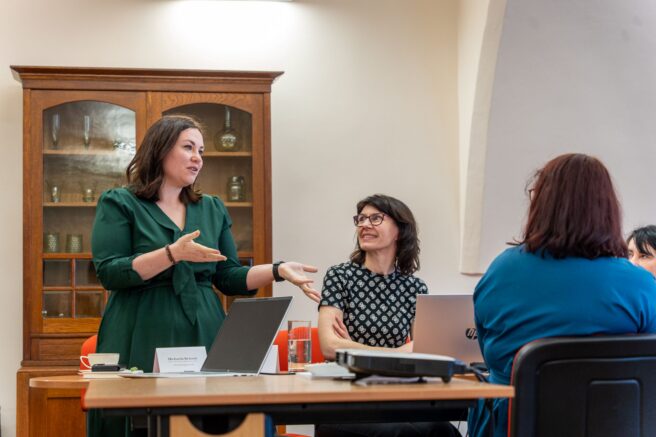
The programme also included guided tours of key departments of the National Library of the Czech Republic with international recognition, such as the Department of Manuscripts and Early Printed Books, the Digital Collections Division, and conservation and restoration research laboratories.
The three-day forum reaffirmed the importance and continued relevance of long-term cooperation between Czech and Slovak libraries. Sharing expertise in digitalisation, legislation, technological innovation, and communication of the library’s role in society is essential for their continued development in a rapidly evolving information environment.
This was aptly summarised by Kamila Prextová, President of the Slovak Library Association: “The forum is a unique format of professional meeting for in-depth discussion of critical issues that urgently need to be addressed in the library world.”